Celtic Empire
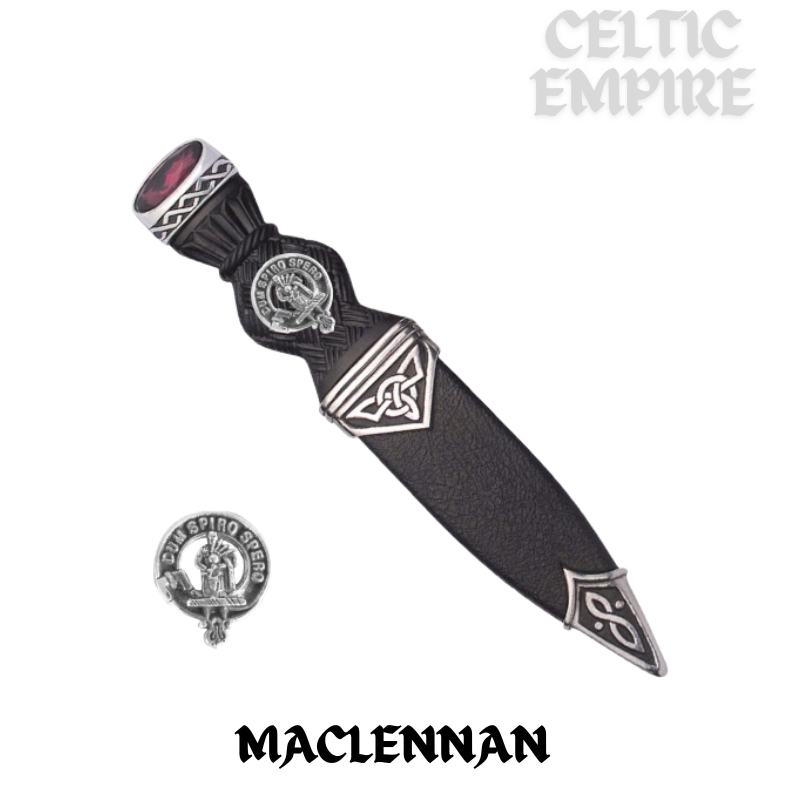
MacLennan Interlace Family Clan Crest Sgian Dubh, Scottish Knife
MacLennan Interlace Family Clan Crest Sgian Dubh, Scottish Knife
Couldn't load pickup availability
 Hand Made
 Return and Exchange
 Worldwide Delivery


SCOTTISH CLAN CREST HIGHER QUALITY SGIAN DUBH
This exquisite Sgian Dubh is crafted by The Sgian Dubh Company in Scotland, renowned for producing the finest sgian dubh available today. Each piece is elegantly presented in a premium blue box, proudly marked as "Made in Scotland."
This stunning Sgian Dubh, a traditional Scottish knife with a distinctive black handle, can be customized with your Clan crest, available in lead-free pewter or luxurious sterling silver. We cater to all Clans with this premium Sgian Dubh, which arrives in a beautiful blue presentation case. Meticulously crafted, it features a handle and sheath made from durable resin with plated metal accents. Antique "genuine" Sgian Dubhs with sterling silver fittings can fetch upwards of $1,000; however, we offer these unique pieces at accessible prices—simply inquire for details.
This brand-new Sgian Dubh measures 7 1/2” (190 mm) in length and 1 3/8” (35 mm) in width, showcasing a stainless steel blade complemented by nickel silver plated fittings. At the top, you can choose between a stunning imitation glass stone in blue sapphire, emerald green, or purple amethyst. Make your selection when placing your order.
The Clan crest is beautifully encircled by an intricate belt and buckle motif, featuring your clan motto inscribed in raised relief lettering. Each Sgian Dubh is meticulously handcrafted with high attention to detail, with the Clan Crest measuring 11/16" (19.5 mm) in diameter. Historically, the clan chief would present his crest to clansmen as a mark of loyalty and clan affiliation.
Please be aware that this item is made to order, requiring a few days for crafting. All Clans are represented in our offerings.
THE ORIGIN OF THE "SGIAN DUBH"
The term Sgian Dubh, which translates to "Black Knife" in Gaelic, is believed to have originated from the knife's dark aesthetic—early handles were often hand-carved from black bog wood, while the blades developed a dark hue over time from usage. Another theory suggests that the name refers to the concealed nature of the weapon, which is why it is customarily worn visible at